From product intent to an agent-ready plan.
Enact combines customer and team context with the realities of your codebase, gives product and engineering one place to approve the plan, and keeps that approval enforced as work moves into issue trackers and AI coding tools.
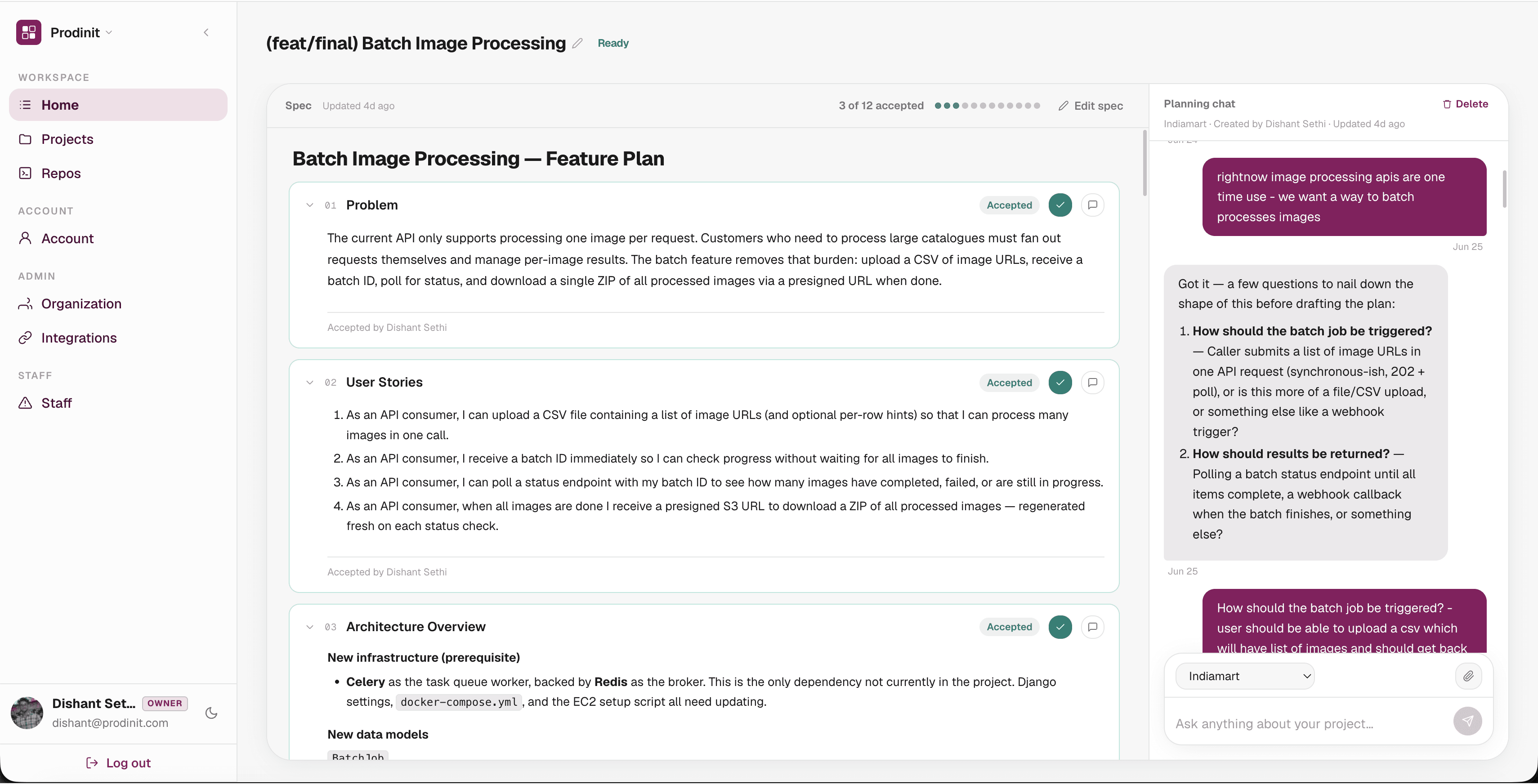
- 01Problem
- 02User Stories
- 03Architecture Overview
- 04API Endpointsin review
Inside a plan
Every plan is a numbered spec your team signs off section by section. Nothing reaches a coding agent on a section nobody accepted.
Everything before coding begins
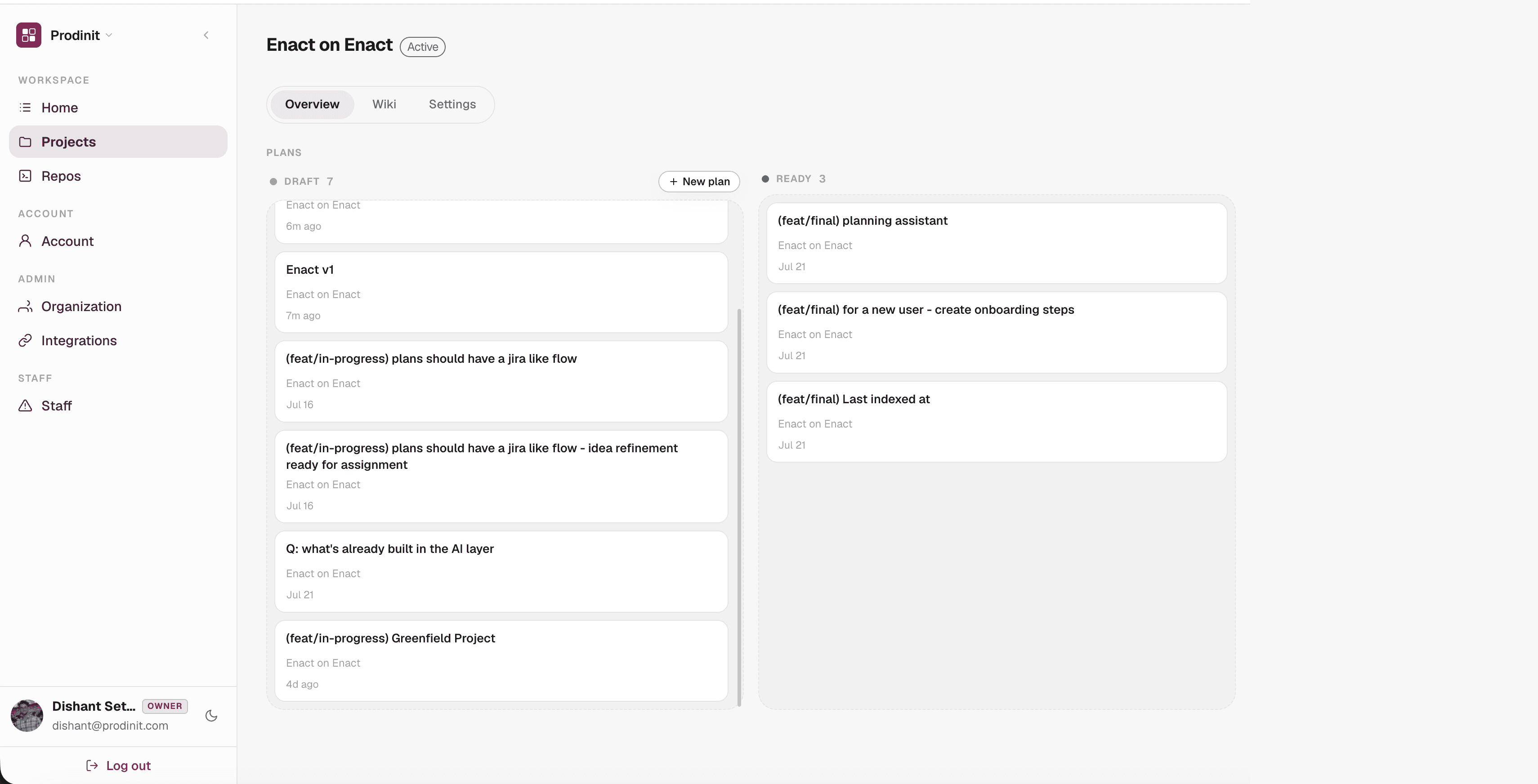
Every PM starts working like your best staff PM, every engineer like your best staff engineer.
Greenfield planning
Turn intent from a call, a ticket or a Slack thread into a structured plan — scope, non-goals, acceptance criteria and technical approach — that product and engineering approve together before any code exists.
PMs · Engineering Leads
Impact analysis
Map which services and repos a change actually touches before it's built — affected endpoints, consumers and edge cases surfaced up front, instead of discovering the blast radius during code review.
Developers · Engineering Managers
Codebase Q&A
Ask anything about your system in plain English and get answers grounded in the actual code — across one repo or many. Works on legacy codebases, where the people who made the original decisions have usually moved on.
New Hires · QA · Support
Automated technical documentation
File-level docs, API reference, architecture diagrams, Mermaid and user-flow diagrams — generated from the code itself. Documentation that stays current because nobody has to remember to update it.
Entire Engineering Org
Harness for Product
A working brain for the whole product ecosystem — the decisions, specs and context that normally live in scattered docs and people's heads, held in one place every surface can draw on.
PMs · QA · Support
MCP server for coding agents
Give Cursor, Claude Code, Copilot and Windsurf direct access to the approved plan and its context. Agents work from decisions a human signed off, with clear boundaries — not from a private prompt.
Developers · DevOps
Works with what your team already uses
Enact reads context from the places work already happens, and delivers the approved plan into the tools your team builds in. Nothing to retype, no new place to check.
Reads from

Delivers to
See Enact on Your Workflow
Sign up for a working session. Bring a real spec, ticket, or Slack thread and we'll show how Enact turns it into an implementation-ready plan.
Real demo, your workflow
Bring a real spec, a Jira board, or a Slack thread. We'll show you exactly how Enact handles it.
Honest fit answer
If Enact is right for your team, you'll leave knowing exactly how to get started. If it isn't, we'll say so.